25年9月,OpenAI与杜克大学、哈佛大学联合发表了一篇名为“How People Use ChatGPT” 的文章,即使已经是将近半年前发表的文章了,但我依然觉得值得一读。
最近硅谷科技圈和创投界最核心的讨论焦点就是“ AI正在重塑SaaS的底层逻辑和商业模式”,传统的SaaS公司提供的是“工具”,而AI时代正在向提供“结果”转变。每一次Anthorpic发布产品更新,都会直接在美股和全球资本市场引发一场被部分媒体和交易员称为“软件末日”的抛售潮。
现在而言,研究什么是不会被AI所取代的,对SAAS公司和独立开发者们至关重要。下面就让我们开始这篇文章,一共4155字,阅读时长10分钟。
第一点:惊人的用户规模与人口统计学变迁
截至2025年7月,ChatGPT每周有约7亿活跃用户,发送超过180亿条消息,这代表了全球约10%的成年人口。在用户画像上,报告发现了几个重要趋势:
- 性别差距基本消除: 早期采用者中男性比例极高(约占80%),但到2025年6月,性别差距已经大幅缩小,活跃用户中女性名字的比例甚至略微反超。
- 年轻群体是主力: 近一半由成年人发送的消息来自26岁以下的年轻用户。
- 全球化与阶层差异: 过去一年中,中低收入国家的ChatGPT使用量增长最为迅速。同时,受教育程度较高及从事高薪专业工作的用户,更倾向于将AI用于工作场景
第二点:AI的核心使用场景
非工作需求增速反超。尽管目前针对AI的经济学分析多集中在其对职场生产力的影响上,但数据表明,非工作相关消息的增长速度远超工作相关消息。非工作用例的占比从2024年6月的53%大幅攀升至2025年6月的73%以上。
第三点:用户到底在聊什么?
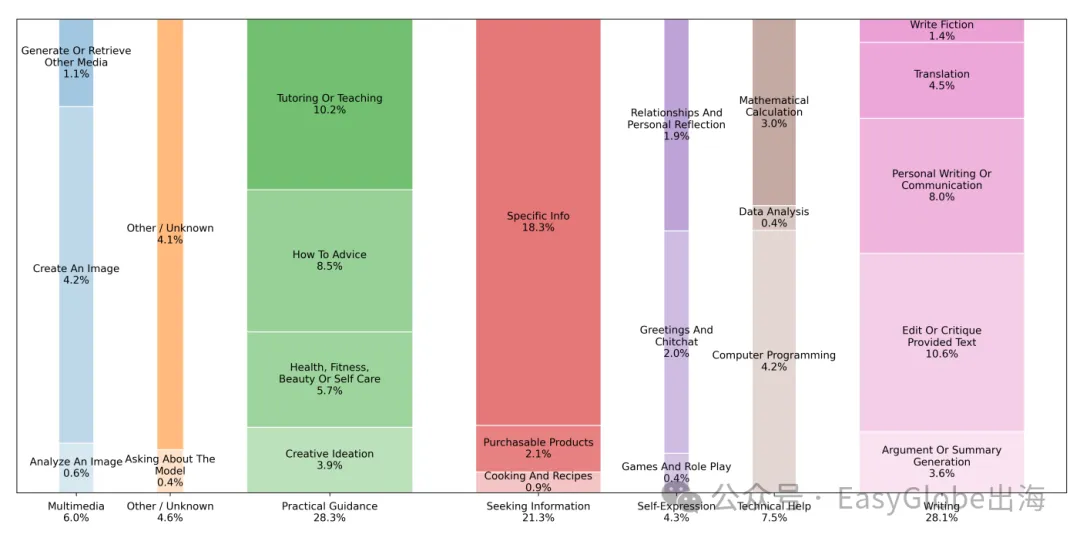
报告发现,近80%的对话集中在以下三个主要类别:
- 实用指导(Practical Guidance,约占29%): 包括辅导、教学、生活建议和创意构思等,是目前最常见的应用场景。
- 寻求信息(Seeking Information,约占24%): 用于搜索人物、事件、产品或食谱等,AI几乎成为了传统网络搜索引擎的强力替代品。
- 写作(Writing,约占24%): 这是工作中最常见的用例,占工作消息的40%。有趣的是,约三分之二的写作任务是让AI修改、润色、总结或翻译用户已经提供的文本,而非从头凭空生成新内容。
打破外界猜测的冷知识: 与许多人的直觉相反,计算机编程相关的对话仅占总量的4.2%。此外,关于人际关系反思、情感陪伴和角色扮演的对话比例也极低,合计不足2.5%。
第四点:用户对话意图占比
研究人员引入了一个新的分类维度,将对话分为三类:询问、执行和表达
- 询问(Asking,占49%): 寻求信息或建议以辅助决策。
- 执行(Doing,占40%): 让模型直接生成可以用于生产环节的输出(如起草邮件、写代码等)。
- 表达(Expressing,占11%): 仅表达情绪,无明确任务目标。
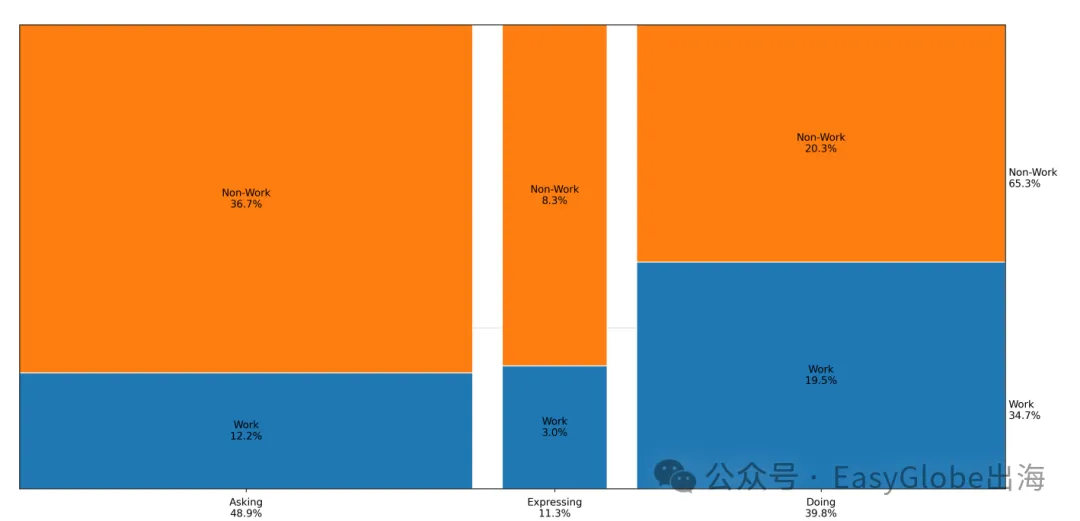
在工作场景中,高达56%的消息属于“执行(Doing)”。但总体来看,“询问(Asking)”类消息的增速最快,且在后续交互中获得了明显更高的用户满意度评价。非工作使用场景中ChatGPT 整体使用的活动分布
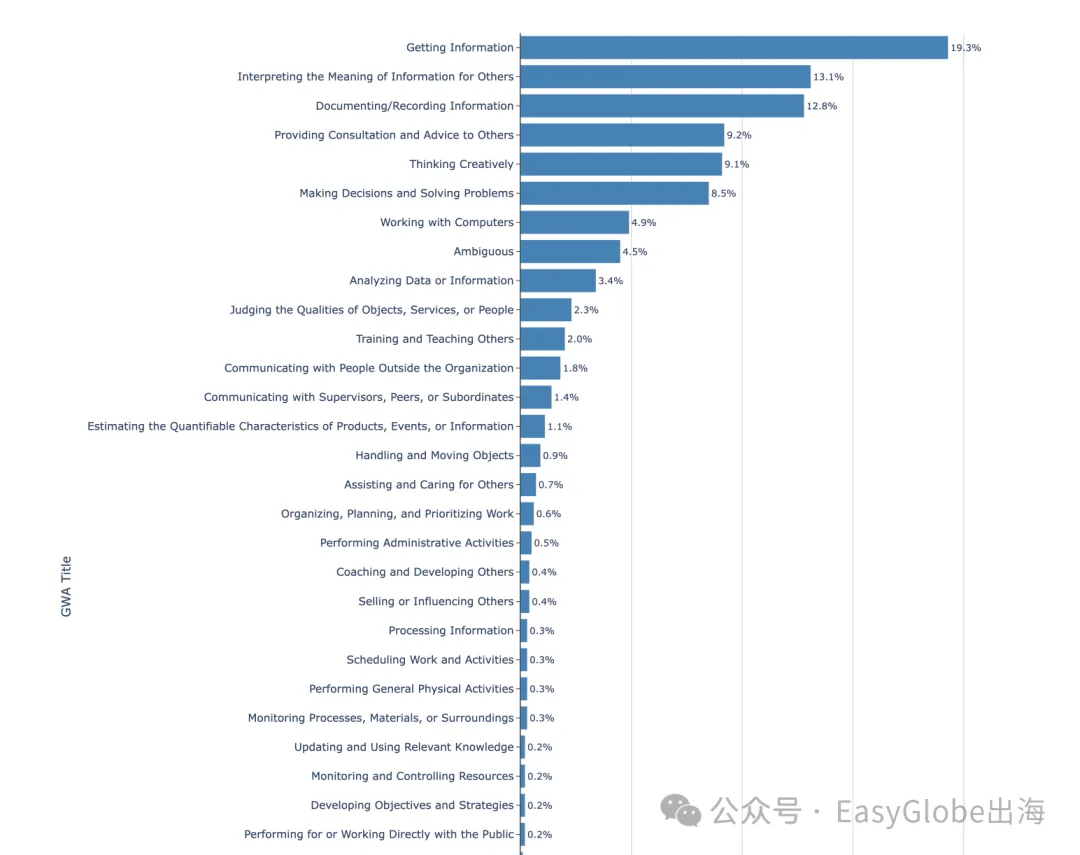
- 获取信息 (Getting Information):19.3%。这是总体使用中最常见的动作,类似于把 AI 当作搜索引擎来用。
- 为他人解释信息的含义 (Interpreting the Meaning of Information for Others):13.1%。比如让 AI 总结报告、翻译内容或解释复杂概念。
- 记录/归档信息 (Documenting/Recording Information):12.8%。
- 提供咨询和建议 (Providing Consultation and Advice to Others):9.2%。
- 创造性思考 (Thinking Creatively):9.1%。
- 做出决策和解决问题 (Making Decisions and Solving Problems):8.5%。
- 使用计算机工作 (Working with Computers):4.9%(如编程辅助等)。
这七大活动,涵盖了整个 ChatGPT 平台 76.9% 的使用量。
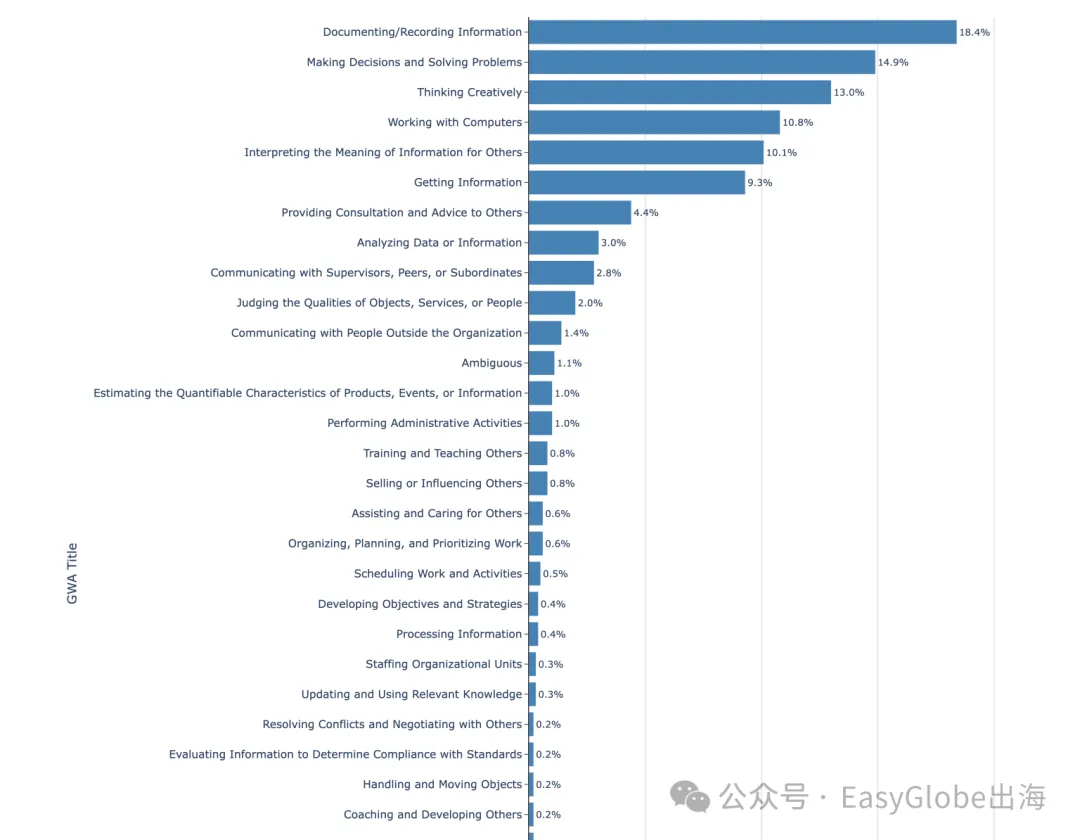
工作使用场景中ChatGPT 整体使用的活动分布当研究人员将样本严格限制在“仅用于工作”的消息时,图表呈现出了非常不同的任务重心排序。
研究报告表明ChatGPT更多作为“决策顾问”而非“流水线工人” ,通过将用户发送的消息与美国职业信息网络(O*NET)的任务数据相匹配,研究发现了一个惊人的跨行业共性:无论从事何种专业工作,人们使用ChatGPT的主要工作活动都高度集中在“获取和解释信息”以及“做出决策、提供建议、解决问题和创造性思考”上。
这说明ChatGPT目前提供的核心经济价值在于“决策支持(decision support)”,它更像是一个辅助思考的副驾驶(co-pilot),这在知识密集型工作中尤为重要。工作场景下的前七大活动(占工作总消息的近 81%):
- 记录/归档信息 (Documenting/Recording Information):18.4%。在职场中,这项任务跃升至第一位,表明员工大量利用 AI 来起草文档、撰写邮件、生成会议纪要等。
- 做出决策和解决问题 (Making Decisions and Solving Problems):14.9%。相比日常使用,职场上人们更依赖 AI 来协助攻克难题和辅助决策。
- 创造性思考 (Thinking Creatively):13.0%。例如策划营销方案、构思项目思路等。
- 使用计算机工作 (Working with Computers):10.8%。在工作场景中,与代码和计算机系统相关的任务占比翻了一倍以上。
- 为他人解释信息的含义 (Interpreting the Meaning of Information for Others):10.1%。
- 获取信息 (Getting Information):9.3%。在职场中单纯“搜集信息”的比重反而大幅下降(从总体的 19.3% 降至 9.3%)。
- 为他人提供咨询和建议 (Providing Consultation and Advice to Others):4.4%。
未来哪些行业不容易被大模型所替代?
这份报告的数据对于个人开发者来说是一座“金矿”,因为它揭示了全球7亿用户最真实、最迫切的需求,同时也暴露了通用大模型(如ChatGPT官方网页版)未能完美覆盖的垂直盲区。作为个人开发者或创业团队,资源有限,不适合做大而全的平台,但非常适合做 “深而专”的垂直应用和轻量化工具。基于报告中的数据,以下是几个极具潜力的应用类型和目标人群建议:
1. 面向“26岁以下年轻人群”的定制化教育与辅导应用
• 数据支撑:报告指出,近一半的成人ChatGPT消息来自于26岁以下的用户。此外,“辅导或教学(Tutoring or Teaching)”占据了所有消息的10.2%,是绝对的核心用例。• 你可以做什么:不要做通用的问答框,而是做高度定制化的垂直学习工具。例如:
- 针对特定学科(如外语学习、特定编程语言、考研辅导)的“AI私教”。
- 能够根据用户的历史薄弱点,自动生成循序渐进练习题的App。
- 面向大学生的论文逻辑梳理、文献总结辅助工具。
2. 聚焦“已有文本处理”的轻量化工作流插件(浏览器扩展/效率工具)
• 数据支撑:在职场中,“写作”是最常见的应用场景,占比达40%。但至关重要的一点是,约三分之二的写作任务是要求AI对用户“已经提供的文本”进行修改、润色、翻译或总结(例如翻译占4.5%,润色占10.6%),而非凭空生成新内容。• 你可以做什么:个人开发者非常适合开发嵌入用户现有工作流的微型工具。
- 开发基于浏览器、Notion、Word或邮件客户端的轻量级插件,让用户选中自己写的粗糙草稿后,一键“转换为正式商业邮件”或“提取出多语言摘要”。
- 这类应用不需要用户跳转到ChatGPT网页去复制粘贴,解决了交互摩擦力的问题。
3. 深耕“决策辅助”与“生活指南”(做用户的AI副驾驶)
• 数据支撑:用户意图正在发生转变,“询问(Asking)”类需求(旨在获取信息以做出更好的决定)占比高达49%,增速最快,且用户满意度显著高于直接让AI干活的“执行(Doing)”类。同时,“实用指导(Practical Guidance)”占总使用量的近29%,包括大量的“操作方法建议”和“健康/健身/自我护理”。• 你可以做什么:开发充当**“特定领域顾问(Co-pilot)”**的应用,帮助用户做决策。
- 健康与健身:用户需要根据自身伤病史、作息时间定制的健身和饮食计划(属于高度定制化的实用指导)。你可以做一个只需用户填入参数,即可生成、追踪并动态调整健康计划的App。
- 购物与旅游规划:收集用户的偏好、预算,帮他们对比选项、制定旅游路线或购买建议。
4. 探索“低频但极高满意度”的情感与自我反思赛道
• 数据支撑:虽然“自我表达(Self-Expression)”(包括人际关系反思、倾诉等)在ChatGPT上的使用率很低(合计仅占5.3%),但报告揭示了一个惊人的现象:这类交互的用户满意度(Good:Bad比例)高达7.86,在所有类别中位列第一。• 你可以做什么:通用大模型冷冰冰的界面可能不适合情感倾诉,但这正是垂直App的机会。◦ 你可以开发一款AI情绪日记或冥想/心理沙盘应用,提供一个安全、私密、有同理心的界面,专门服务于有倾诉、缓解压力和个人反思需求的人群。这类应用容易培养极高的用户粘性。
5. 瞄准“中低收入国家/地区”的出海市场
• 数据支撑:报告发现,在过去一年中,中低收入国家(人均GDP在1万美元至4万美元之间)的ChatGPT采用率增长最为迅速。• 你可以做什么:如果你具备多语言开发或本地化能力,可以考虑“出海”。面向这些新兴市场(如拉美、东南亚、东欧部分地区),开发符合当地语言习惯、定价更亲民的平替AI效率工具或本地化服务(如跨境电商文案生成、多语种客户沟通助手)。