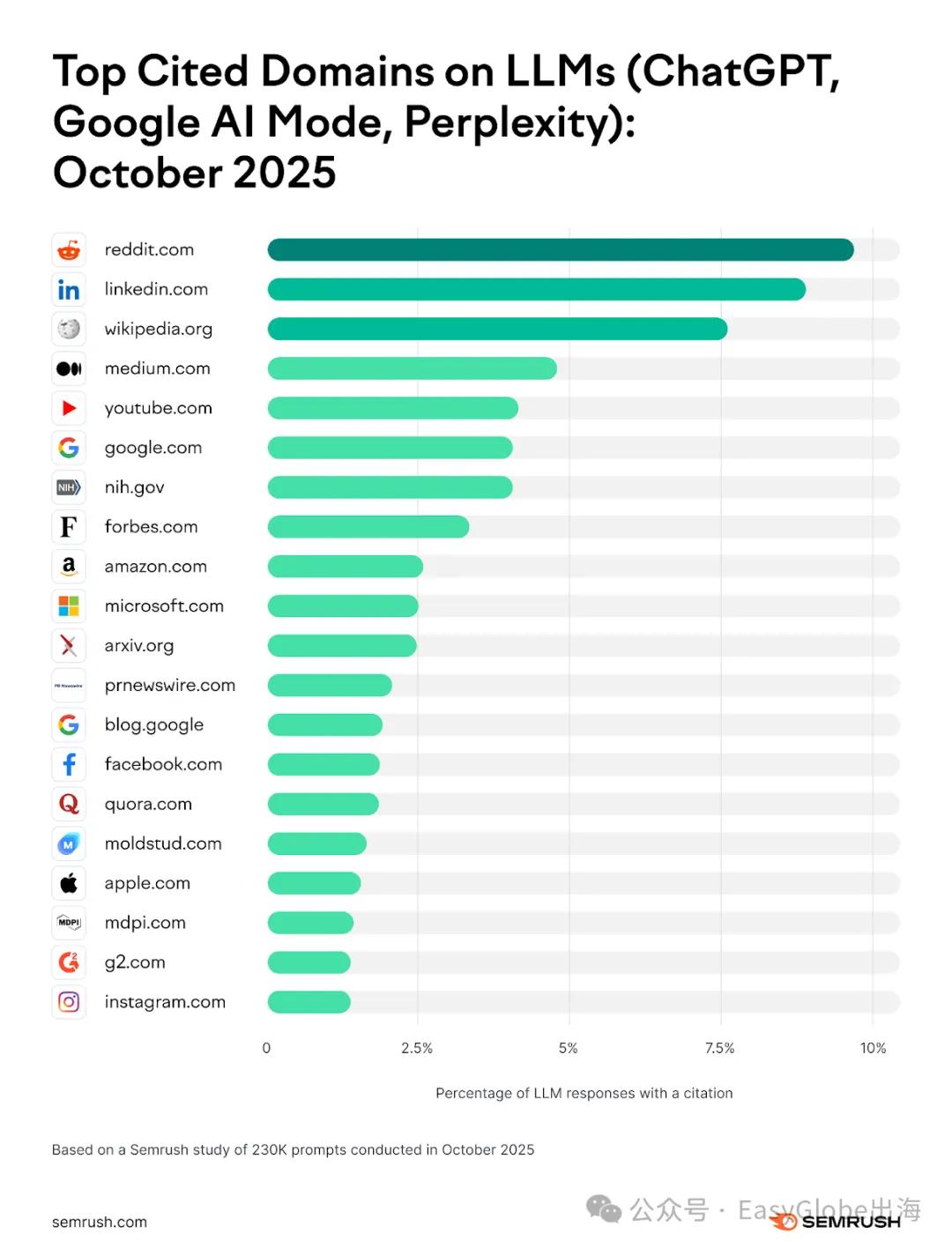
在AI搜索时代,你的品牌不仅要在自己的官网上建设内容,更需要出现在那些已经被AI引擎高度信任的第三方高权重域名上。这份覆盖23万次提示词(Prompts)的研究指出,选对第三方平台是提升AI可见度(AI Visibility)的关键不要只盯着自己的网站,要去“借船出海”这份来自Semrush的报告告诉了大家各大AI平台的“口味”大起底(去哪里做?)
不要只盯着自己的网站,要去“借船出海”这份来自Semrush的报告告诉了大家各大AI平台的“口味”大起底(去哪里做?)
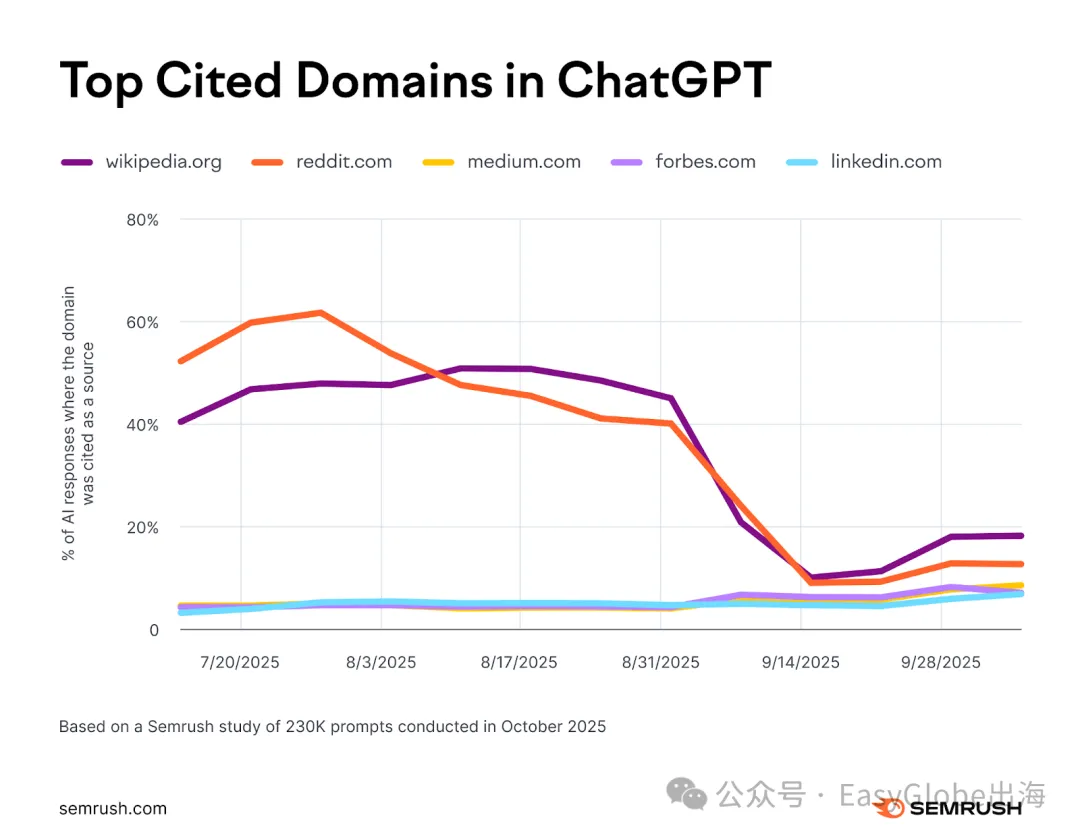
瘦死的骆驼比马大:尽管在2025年9月中旬,ChatGPT对Reddit和维基百科的引用率分别从60%和55%暴跌至10%和20%以下,但这不仅没有改变它们的霸主地位,Reddit和维基百科依然是目前ChatGPT最常引用的两大域名。新晋流量红利:在洗牌之后,PRnewswire(美通社)、Forbes(福布斯)和Medium成为了ChatGPT上最大的赢家。
💡 GEO策略:在ChatGPT做优化,除了传统的维基百科建设,你可以加大在Medium上的内容布局,或者通过公关稿件(如PRnewswire)和商业媒体(Forbes)来增加品牌曝光。
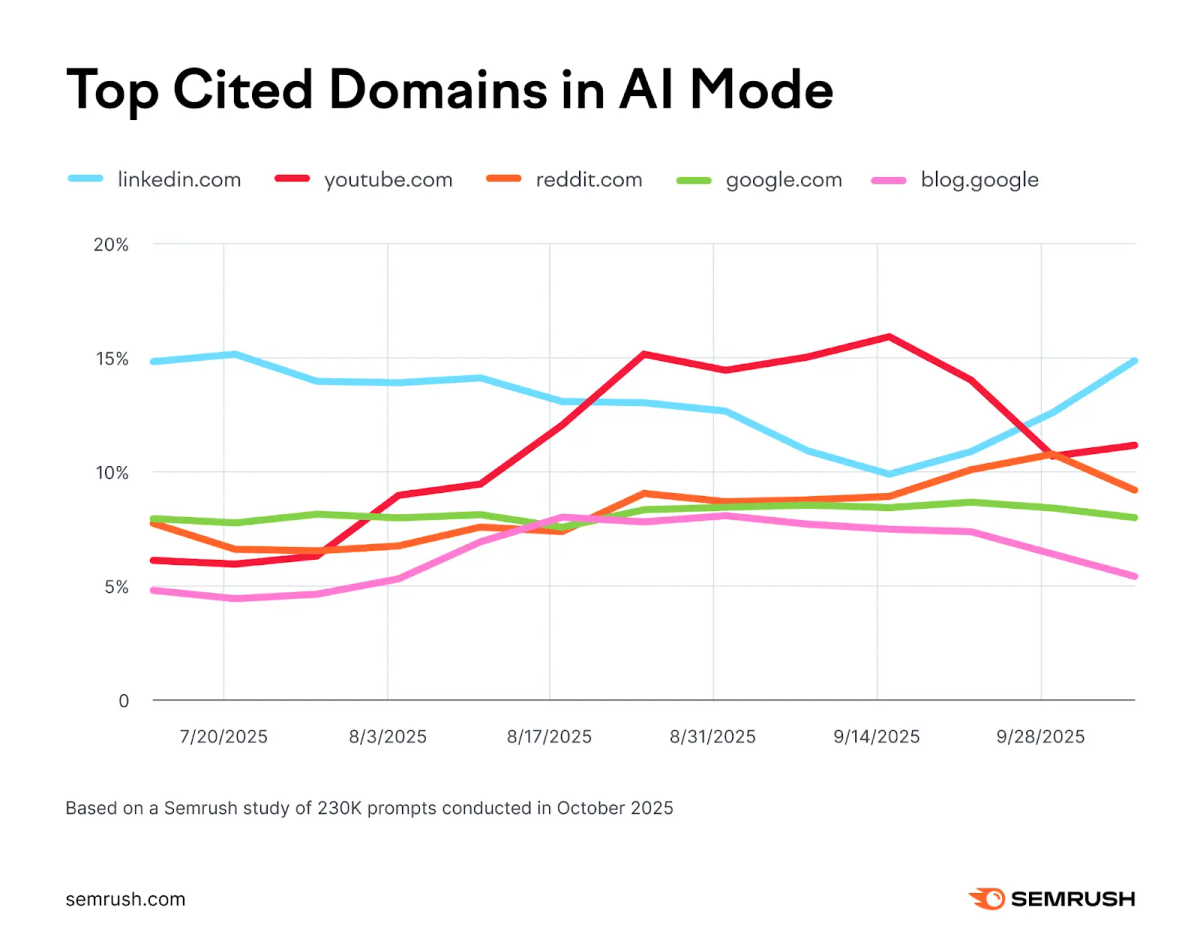
2. Google AIO:“护城河”生态 + UGC视频 极度偏爱“自家兄弟”:Google AI Mode展现出了非常明显的偏好——它更倾向于引用谷歌自有或有重大合作关系的域名。核心引流阵地:它的前五大引用来源是 LinkedIn、YouTube、Reddit、Google 和 Google Blog。尤其是UGC(用户生成内容)类域名(如YouTube和Facebook)在近期获得了最大的增长。
避坑指南:不要在维基百科上为Google AI浪费太多时间,因为维基百科在Google AI的回答中被引用的比例仅有约2%。
💡 GEO策略:想要被Google AI引用,视频化(YouTube)和深耕职场社交(LinkedIn)是胜率最高的选择。
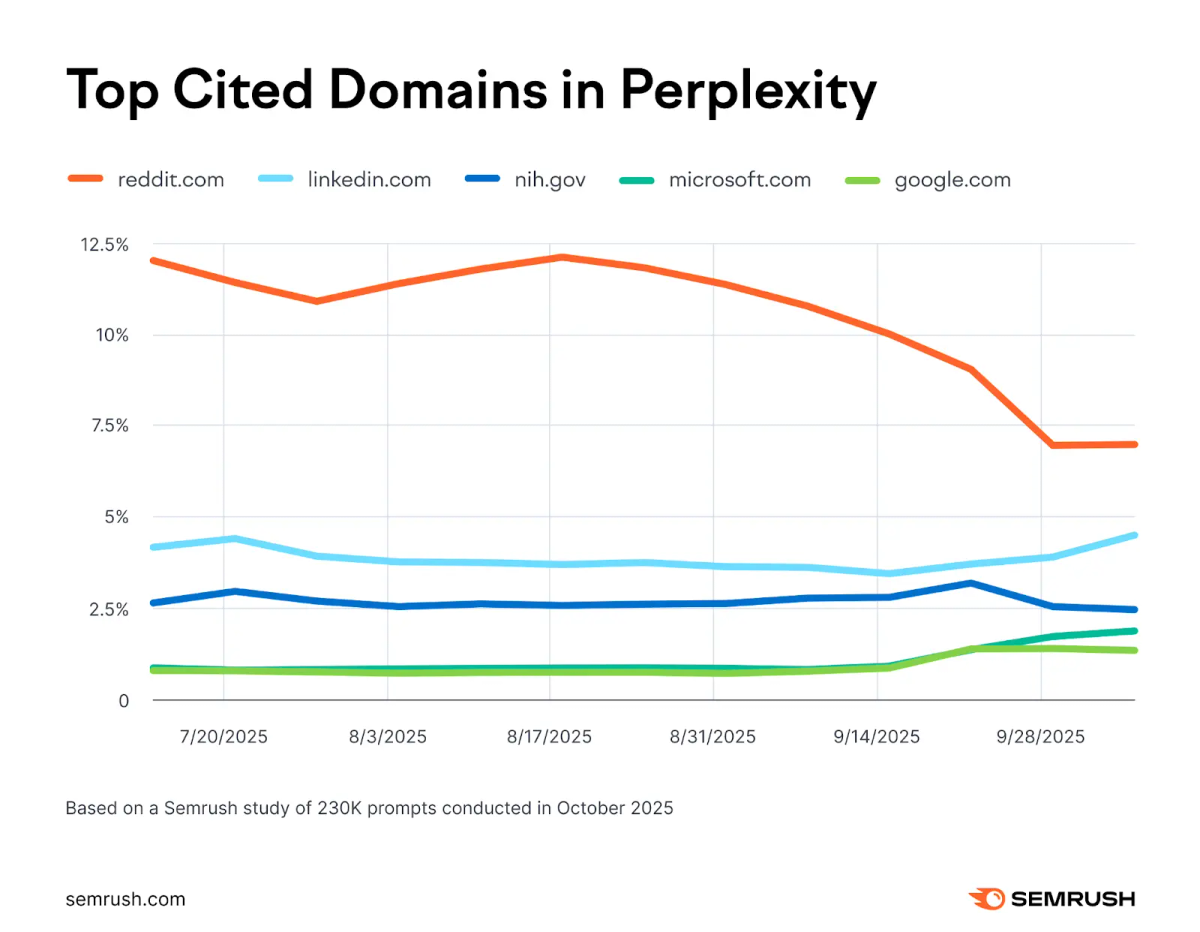
3. 攻克 Perplexity:专业/权威机构 + 综合社交社区 最稳定的引用源:与ChatGPT的大起大落相比,Perplexity的引用来源相对稳定。核心引流阵地:主要集中在 Reddit、LinkedIn、NIH(美国国家卫生研究院)、Microsoft 和 Google。
💡 GEO策略:Perplexity不仅看重Reddit这样的社区讨论,还非常注重极高权威性的机构(如NIH、Microsoft),如果你的行业偏专业或学术,争取高权威机构的提及至关重要。
4. Claude 与 Gemini:补齐官方文档、开发者内容和长尾问答 Claude 和 Gemini 的引用逻辑更依赖具体使用场景:研究、文档问答、Deep Research、开发者工作流和搜索增强回答会把“可验证资料”放在更靠前的位置。因此不要只做社区种草,也要补齐官方文档、帮助中心、API 示例、FAQ 和结构化案例。
Claude 侧尤其适合准备可被引用的长文档、白皮书、技术说明和清晰来源;Gemini 侧则要关注 Google 搜索生态、YouTube、Search Console 可见性和 Deep Research 可能抓取的网页内容。
💡 GEO策略:把品牌信息拆成“官方说明 + 第三方验证 + 场景问答 + 数据来源”四层,而不是只发布一篇泛泛的宣传稿。
全平台GEO的“万金油”与终极策略 通过交叉对比,我们可以告诉读者几个跨平台的GEO“绝对赢家”:
LinkedIn(领英)的全面崛起:无论是在Google AI(高达近15%的引用率),还是在ChatGPT和Perplexity上,LinkedIn的引用量都在稳步上升。职场、B2B和专业知识领域的GEO,LinkedIn是首选。 Reddit 依然不可替代:它是唯一一个同时位列三大AI平台(ChatGPT、Google AI、Perplexity)前五大引用来源的域名。
🎯 总结你的教学Call to Action(行动呼吁): 正如Semrush专家所指出的,AI的引用模式变化极快,且各平台并不统一。
做GEO不能像过去做SEO那样一劳永逸。
第一步:像过去追踪搜索结果页(SERPs)一样,开始追踪你的行业在AI上的“可见度(AI Visibility)”。
第二步:分析在你所处的细分领域中,哪些域名最受AI信任。
第三步:主动出击,与这些高频被引用的域名建立联系并布局内容,将别人的权重转化为你的品牌背书。
GEO 执行清单:从监测到发布的 4 步 第一步:列出核心问题。把用户会问 AI 的问题写成 prompt,包括品牌对比、工具推荐、价格、教程、替代方案和行业概念解释。
第二步:监测当前引用源。分别在 ChatGPT、Google AI、Perplexity、Claude 和 Gemini 中记录被引用页面、引用语境和缺失信息。
第三步:补内容和补外部语境。官网补事实页、FAQ、案例和数据说明;外部补 LinkedIn、Reddit、YouTube、Medium、PR 和权威目录。
第四步:按月复核。AI 引用源变化很快,要记录每次更新前后的引用变化、点击变化和品牌提及变化。
数据来源与复核说明 本文的策略依据来自 Semrush 对 AI 引用域名的研究,以及 Google、Perplexity、Anthropic、Gemini 等官方文档对 AI 搜索、引用和研究型回答的说明。不同平台的引用结果会随时间、地区、账号、查询方式和索引状态变化。
因此这篇文章更适合作为 GEO 选平台和搭建监测流程的起点。真正执行时,需要用你自己行业的 prompt 做复测,再决定哪些第三方平台值得持续投入。